Sunday, May 14, 2006

For Mother's Day: mothers and babies


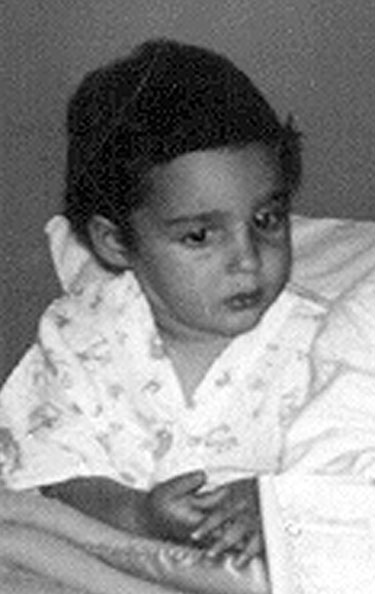
Okay, who are these three dark beauties?

A hint: one of them is the very first picture you've ever seen on this blog of neo-neocon, sans apple. Not that you'd recognize me, of course. Even my own mother might not recognize me from this photo.

My own mother, you say? Of course she would. Ah, but she's here too, looking a bit different than she does today--Mother's Day--at ninety-two years of age. Just a bit; maybe her own mother wouldn't recognize her, either.

Her own mother? She's the one who's all dressed up, with longer hair than the rest of us.

The photo of my grandmother was taken in the 1880's; the one of my mother in the teens of the twentieth century; and the one of me, of course, in the 1950s.

Heredity, ain't it great? My mother and grandmother are both sitting for formal portraits at a professional photographer's studio, but by the time I came around amateur snapshots were easy to take with a smallish Brownie camera. My mother is sitting on the knee of her own grandfather, my grandmother's father, a dapper gentleman who was always very well-turned out. I'm next to my older brother, who's reading a book to me but is cropped out of this photo. My grandmother sits alone in all her finery.

We all not only resemble each other greatly in our features and coloring, but in our solemnity. My mother's and grandmother's seriousness is probably explained by the strange and formal setting; mine is due to my concentration on the book, which was Peter Pan (my brother was only pretending to read it, since he couldn't read yet, but I didn't know that at the time). My mother's resemblance to me is enhanced by our similar hairdos (or lack thereof), although hers was short because it hadn't really grown in yet, and mine was short because she purposely kept it that way (easier to deal with).

My grandmother not only has the pretty ruffled dress and the long flowing locks, but if you look really closely you can see a tiny earring dangling from her earlobe. When I was young, she showed me her baby earrings; several miniature, delicate pairs. It astounded me that they'd actually pierced a baby's ears (and that my grandmother had let the holes close up later on, and couldn't wear pierced earrings any more), whereas I had to fight for the right to have mine done in my early teens.

I'm not sure what my mother's wearing; some sort of baby smock. But I know what I have on: my brother's hand-me-down pajamas, and I was none too happy about it, of that you can be sure.

So, a very happy Mother's Day to you all! What would mothers be without babies...and mothers...and babies....and mothers....?

Saturday, May 13, 2006

Answering a true liberal's question about Iraq

Recently an elderly aunt (oh, I don't think she'd like that "elderly" bit at all!) who lives in San Francisco asked me the following question during a phone conversation we were having, "So, do you still think it was good for us to go into Iraq?"

She's a lifelong liberal Democrat, but one of those people in my life who, since my "change," has always been patient and respectful towards me in all of our discussions. We actually don't talk too much any more about politics--it's mostly become one of those "agree to disagree" things--but at first we certainly did, and (unlike many) she made efforts to listen and never flew off the handle.

So, when she asked that question, her tone was only ever-so-slightly dubious, with the subtext, "How could you possibly believe such a thing?" only vaguely hinted at.

My answer amounted to the following:

Yes, in a way, although I never phrased it that way to begin with and wouldn't describe it that way today. It's not a question of "good for us," although the results could end up being good for us in the long run. But the way I saw it at the time, and still see it, is that it was a difficult and risky decision that represented something we needed to do, faced with a bad situation that had been building for decades in that area.

The risks were always huge, but we had to take a stand on Saddam's defiance of the terms of the ceasefire and of the UN's authority, and we had to try to see whether we could get something decent going in the region. That country seemed, for a whole host of reasons (including, most prominently, humanitarian ones), a good place to try to start.

I take the long view, and the jury is still out on what will happen in Iraq. You may not realize it, because of the news sources you read, but the government there is still moving ahead, and the country is not actually in a civil war, despite the bitter and bloody conflict. And it may also seem strange to you when I say this, but I was actually expecting worse. I expected far more bloodshed to occur, and more unrest and street fighting, not less. In this perhaps I'm different than most, but I seem to recall those were the prewar predictions even from the Left--which they seem to have forgotten, since moving the goalposts is always good sport.

I never thought a good outcome was a foregone conclusion. And the idea that the Bush administration uniformly thought so is a distortion (and here I referenced my posts on that theme, and on the famous "cakewalk" remark).


Her response was to thank me for a thoughtful and complex answer--which gives you a good idea of what sort of a person she is, and why we can talk together. I doubt she agreed with me, but not only is she willing to talk and to listen, but I know I represent one of the few opposing views she ever encounters, and she values hearing a different perspective. That makes her a true liberal indeed, in the first sense of the word as it's defined here:

broad: showing or characterized by broad-mindedness; "a broad political stance"; "generous and broad sympathies"; "a liberal newspaper"; "tolerant of his opponent's opinions"

Blogger collage

I just noticed (via this link to the site by Gerard Van der Leun) that I've got a place in the blogger collage Blogs With a Face." I'm especially honored, since I hardly qualify--I'm more like "blogs with a partly-hidden face."

Van der Leun is especially pleased with his positioning next to the stunning Michelle Malkin. As well he might be. And I, likewise, have no reason whatsoever to complain about my personal surroundings. I am more or less encircled by some of the finest male pulchritude in the blogosphere, both on the sides and above.

And they can write, too.

Friday, May 12, 2006

Negotiating with Iran: who's the real enemy?

Even back when I was a liberal, I don't think I ever was out of touch with reality about the nature of our enemies.

For example, when the ayatollahs came to power in Iran and launched their PR campaign by taking over the American Embassy and making the Carter administration look like impotent fools, it was clear what we were dealing with. The repressiveness of the new Iranian regime (particularly vis a vis women) was clear from the start, as was its aggressive intent and its uncompromising tyranny.

This was how the crisis began:

On November 1, 1979 Iran's new leader Ayatollah Ruhollah Khomeini urged his people to demonstrate against United States and Israeli interests. Ruhollah Khomeini was anti-American in his rhetoric, denouncing the American government as the "Great Satan" and "Enemies of Islam".

Well, plus ca change, plus c'est la meme chose. There are few regimes around that represent such models of consistency over time.

Yes indeed, as I've said before, one can rightfully disagree on what to do about Iran. But at the risk of sounding like a broken record I will repeat: the intent of the Iranian leadership is clear, because they have made it clear. These are not people with whom one can expect to negotiate and reach any sort of favorable outcome, or indeed any outcome at all that isn't a sham.

So the solutions lie elsewhere. They might be strategic: working with other nations to apply the screws in various ways, such as economically. They might be clandestine: working to help Iranians themselves change the regime. And of course they might be military, the solution hated most by liberals, leftists, and pacifists.

And in fact that latter solution--the military one--is also most hated by me. I would imagine it's most hated by almost everyone on the right as well as on the left, because most people on earth are actually not eager for war if other solutions have a good chance of success. Those who advocate a military solution do so because they tend to consider it the least bad of a host of possible bad solutions, and risky ones at that.

I personally still advocate a combination of the strategic and clandestine solutions, holding off a military one till if/when it may be absolutely necessary. But in any event, I don't think it's best to take any possibility off the table.

I believe that I would feel the same way if I were still a liberal Democrat. Some would take that as evidence that I never was a liberal Democrat in the first place, but they would be wrong. The truth is that there have been tremendous changes in the last few decades in the stance of the liberal wing of the Democratic Party (and perhaps "wing" isn't a good word, since the entire party has shifted enough that I'm not sure there's much of a moderate wing remaining).

When I take a look at blogs of the liberal persuasion writing on the topic of Iran, I can't help but feel that a sea change has occurred of such major proportions that I simply don't recognize my own former party.

Here's a case in point--not so much the post itself, but the comments that follow. The most common attitude I see there is that the enemy is bloodthirsty and is on the brink of starting a war, and the enemy must be stopped.

So, what's wrong with that, you say? Only this: the enemy in question is the Bush administration. The other enemy--Iran--is given all the benefit of the doubt, and Bush is given none.

Iran's motives are seen as, if not noble, then as understandable reactions to the threats of others. Its history and its own stated aims are ignored. Its ability to actually make a weapon is doubted; the longest possible time frame for such a possibility is accepted as the earliest possible time frame. And on and on...

Historical context? Fagettabout it.

Bad news vs. even worse news

This morning when I went to Yahoo to check my email, I saw a headline about a blast in Nigeria that had killed two hundred people.

The original headline (it's been slightly changed now) didn't make the accidental nature of the explosion at all clear. So my first thought, of course, was terrorism.

But when I read the first few paragraphs it became apparent that that first thought of mine was wrong. Although the cause of the blast is still not exactly certain, this was the actual situation:

The villagers had been collecting the gushing fuel outside the coastal village of Ilado, about 30 miles east of the main Nigerian city of Lagos, when the fuel ignited, police and rescue workers said.

The dead are just as dead. But it appears to be a tragedy rather than a crime or an act of war.

My point? Ever since 9/11, when I hear about something like this, my first assumption is terrorism. It's now the default position--whereas, prior to 9/11, the reverse was true.

It's certainly not that terrorist attacks weren't commonplace before, but it was easier to relegate them to the background. That shouldn't have been the case--we know that now--but for so many of us, that's the way it was.

Perhaps it's just the way the human mind and heart tends to work. We don't like to face the reality of the threat until it's made unequivocal. We don't want to have to peer too closely into the heart of darkness. And too often we don't want to have to do something about it until it's close to being too late.

In this case and many others, I'm relieved to be incorrect. My sorrow remains at the loss of life. But there are degrees of terribleness in human events, and causes do matter.

Thursday, May 11, 2006

Pubescent rites of passage: coming of age in Astoria (and elsewhere)

Today, reading Fausta's reminiscences about the coming-of-age party for girls in the Hispanic community known as the quinceañero, I was reminded of--well, of lots of things, which I'll get to in due course.

But first, Fausta quoting the NY Times on the subject:

In Miami, home to moneyed Latin Americans and wealthy Cuban-Americans, quinces are fancier than ever, with some parties now veering into Broadwayesque stagecraft. It is not uncommon for a young girl in belly-dancing attire to be carried aloft on a bejeweled "Arabian Nights" bed by four young men or to step out of a custom-built Cinderella castle. Birthday girls saunter across sandy floors as mermaids, à la "Under the Sea," or dance in Victorian regalia, or put on hip-hop routines. Masquerade parties are popular, and costume changes, as in stage productions, are au courant. Even when the party involves just the traditional waltz, a choreographer is a must.

"Some wear short dresses underneath their big dresses and during the disco, they rip off the big dress..."


Even though the quinces were more a bit more modest when Fausta was a girl, she was not looking forward to the event at the time for herself:

As a shy (it was a long time ago) fourteen-year old I dreaded the prospect of a solo evening-long performance on a Mass followed by a ball followed by a dinner. The dread increased as I watched my next door neighbor go through the preparations: endless discussions of what the gowns were to look like (white gown for her, gowns in coordinating colors for her mother and sisters), coordinating accessories, flowers, tuxedo rentals and a thousand other petty details...

When I was a fourteen-year old (and no doubt it was even longer ago for me than for Fausta), I didn't know of any quinces. But there were other coming of age parties: for girls, the Sweet Sixteen. Bar Mitzvahs for Jewish boys. And weddings for all. I knew of no one who came out as a debutante, but I suppose that factored in for some.

Like Fausta, I wasn't all that eager for the two that might apply to me, the Sweet Sixteen and the wedding. In fact, at the age of eleven, on attending my very first big wedding--held in a catering hall, with two hundred guests and eight attendants in pink satin, and a loud band making it hard to speak or to hear--I turned to my mother and shouted over the din, "I'm telling you right now: you'll never get me to do this."

Oh, my poor, poor long-suffering mother. She panicked; did I mean I was never getting married?

"Oh no, it's the wedding," I answered. "Don't ever expect me to have this kind of wedding."

Nor did I want to have the next kind of wedding I attended. It was different, that's for sure: a late morning ceremony in a beautiful old church in Brooklyn Heights. The bride had designed and made her own gown, but this is misleading: she was an artist, and it was exquisite and unusual, a heavy satin with a vaguely Asian obi-like flair and tiny pearls sewn in a striking design. No, no problem there--although I certainly didn't have the skill to follow suit, I admired her style.

The problem came later, when we went to her family's elegant brownstone for the reception. No, not the brownstone itself; that seemed ideal. It was the refreshments. The day was insufferably hot in those pre-airconditioned times, close to 100 degrees. The crowd filled the brownstone and it became even warmer.

So, what was the menu? Elegant simplicity itself, like the bride's dress:

(1) champagne
(2) salted peanuts

Nice beginning, you say? What about the rest?

There was no rest. That was it. And, if you use your imagination, you can guess what happened next. Everyone was sweating and also very hungry: dehydration led to thirst which led to greater imbibement of the champagne, hunger led to massive downing of the salted peanuts which led to greater thirst which led to...well, you get the idea. The entire crowd got totally and completely looped--almost dangerously so.

My own wedding, when it came in the fullness of time, was exactly as I wanted it to be: in my house, rather small, great food, good company.

But I digress (what, moi? Digress??) Back to the quince; we were speaking of the quince. And, thinking about the more general phenomenon of wretched excess in such matters, I've come to the conclusion that its a complex matter, perhaps just a natural part of human nature.

Note in the Times article that the idea of the huge coming out party is catching on:

The quince-style coming-of-age parties have even managed to influence the coming-of-age celebrations of other groups, including West Indians, African-Americans and Asians, who have grown infatuated with the party's choreographed nature and family tributes. This trend is particularly evident in multicultural New York, where the tradition of trading slippers for heels, lighting 16 candles and surrounding the birthday girl with a weddinglike "court" of friends is winning over non-Hispanic girls.

"I am amazed at how many nationalities come in and want these Sweet 16's —Indians, Filipinas, Chinese," said Angela Baker-Brown, who runs Tatiana's Bridal in Queens, which sells quinceañera dresses and props, like the scepter the birthday girl carries. "It is a Hispanic tradition, but these other groups are going to these parties and wanting one as well."


Greed, you say? Materialism? Yes, of course. But reading between the lines I see something else as well, something more heartwarming: love. Call me naive--and perhaps I am--but I think that's part of what's operating here:

The Hispanic community treats it this way: I have one or two daughters. She may get married several times but a '15' happens only once. It's once in a lifetime...Many families who can't really afford the party have them anyway. Traditionally, quinceañera parties have cut across class lines. "They save for this for years," Ms. Albuerne said. Mexican-Americans often share the cost with the extended family, naming several godparents specifically to participate in the process. Cuban families open special savings accounts. "I know some Hispanics who have placed second mortgages on their home for this," she said. "It's important."

The passage from childhood to adulthood traditionally has had these sorts of markers and celebrations, cutting across cultures. The impulse is nearly universal. The ages differ, and the details certainly do: menstrual huts and scarification, for example, are not part of a quince (at least not yet), although tattoos seem to be making a generalized comeback.

But the urge is there, and it is twofold: to mark an important passage for a beloved child, and to do it in style. In our affluent society, we have the money to try to outdo each other in ostentation, it's true. But perhaps that's just another human impulse that goes along with any society with greater resources; note the potlatch.

So, I'd consider accepting any quince invites that might happen to come my way. And I bet there's more than champagne and salted peanuts on the menu.

Understanding Ahmadinejad's letter to Bush: the context

How best to understand Ahmadinejad's letter to Bush?

I've already noted that the letter seems to have worked nicely as propaganda for many people; the evil Bush seen as rejecting the "process" (as in "peace process" or "process of dialogue that might lead to understanding and rapprochement") that Ahmadinejad is seen as opening.

And so, in the interest of cultural sensitivity, I turn to Amir Taheri, Iranian expatriate journalist, to help us out in our desire to comprehend Ahmadinejad. Writing in today's NY Post, Taheri gives us some needed historical and religious context:

"The whole world is moving towards God," Iranian President Mahmoud Ahmadinejad has written to his American counterpart, George W. Bush. "Would Your Excellency not wish to join?"...

Ahmadinejad's epistolary exercise seems merely another of his quirks. But it must be seen as yet another sign that the new leadership in Tehran is determined to provoke a direct confrontation with the United States in the hope that, plagued by internal problems, the Americans will either back away or be humiliated.

Ahmadinejad's move fits into a 14-century-long Muslim tradition, initiated by the Prophet Muhammad himself, of writing letters to "the rulers of the world." In 625 A.D., having consolidated his position in Medina and established a secure power base for his rule, the prophet decided it was time to call on "the infidel" to abandon their faith and submit to Islam. He dictated letters to Khosrow Parviz, the Persian king of kings (a Zoroastrian), and to Emperor Heraclius of Byzantium and the Ethiopian monarch Negus (both Christian).

To each, the prophet's offer was simple: Convert to Islam and secure a place in paradise - or cling to your beliefs and face the sword of Islam.

The Persian monarch ordered his security services to find the "insolent letter writer" and bring him to the court in Ctesiphon, the capital of the Persian Empire at the time. According to Islamic folklore, Muhammad escaped capture only because, soon after, Khosrow Parviz was murdered by his son and designated heir. And within a decade the Persian Empire had disintegrated, with most of its territory falling to the armies of Islam...

It would be wrong to dismiss Ahmadinejad's letter to Bush as just another of the Islamic leader's many weird habits. It would be more prudent, and better politics, to take Ahmadinejad seriously and try and understand him in his own terms.

His letter contains a crucial message: The present regime in Iran is the enemy of the current international system and is determined to undermine and, if possible, destroy it.


It continues to puzzle me that so many of us have to learn the same lesson over and over, and that is this one: tyrants mean what they say. Iran's leadership hasn't had its people chanting "Death to America!" for nothing for all these long decades.

There are issues open to debate: how close is Iran to being able, if not to destroy, then at least to inflict a significant body blow on the US or its ally Israel; and what would be the best course of action to prevent it.

But there should be no debate on one thing: the desire is there on the part of Iran's leadership (perhaps not its people--but, unfortunately, their intent doesn't count for much in this equation). If, after so much repetition, we fail to understand that one basic fact, then we are worse than useful idiots: we might be sowing the seeds of our own destruction.

Wednesday, May 10, 2006

An 18-page letter a day keeps the world at bay: love that "process"

Alexandra of All Things Beautiful's take on Ahmadinejad's 18-page letter to Bush emphasizes the fact that it was a good propaganda move for the Iranian President. She writes:

Thug-In-Chief Ahmadinejad scored quite a success with his 18-page letter to President Bush. Timing was of course carefully orchestrated to coincide with his high-profile visit to a key Muslim country, Indonesia....

We are...little surprised to be told by Iranian political analyst Saeed Leilaz that the letter "could have been the beginning of a new process," and that Secretary of State Condoleezza Rice's reaction, which has of course already been labeled as a 'quick brushoff', would fuel anti-American feelings in Iran.


Ahmadinejad is not ignorant of how this plays to the Left, as Alexandra points out. As for me, I note his canny use of that new-agey word "process"--as in the vaunted Israeli Palestinian "peace process," the success of which was so deeply hoped for and wished for that it took a long time to understand that it was an emperor with no clothes.

Alexandra also quotes Amir Taheri's piece on the subject of what to do about Iran:

Something interesting is happening with regard to the crisis over Iran's nuclear ambitions. Slowly the blame is shifting from the mullahs to the Bush administration as the debate is redirected to tackle the hypothetical question of U.S. military action rather than the Islamic Republic's real misdeeds. "No War on Iran" placards are already appearing where "No Nukes for Iran" would make more sense.

The attempt at fabricating another "cause" with which to bash America is backed by the claim that the mullahs are behaving badly because Washington refuses to talk to them.


Taheri goes on to point out the abject failing of the Carter and Clinton administrations in dealing with Iran.

Revisiting the Carter approach is an exercise in futile and frustrated toothgrinding at the shortsighted naivete of it all. A recap:

In 1979, soon after the mullahs seized power, Mr. Carter sent Ayatollah Khomeini a warm congratulatory letter. Mr. Carter's man at the U.N., a certain Andrew Young, praised Khomeini as "a 20th-century saint." Mr. Carter also tapped his closest legal advisor, the late Lloyd Cutler, as U.S. ambassador to the mullarchy.

A more dramatic show of U.S. support for the mullahs came when Mr. Brzezinski flew to Algiers to meet Khomeini's prime minister, Mehdi Bazargan. This was love at first sight -- to the point where Mr. Carter approved the resumption of military supplies to Iran, even as the mullahs were executing Iranians by the thousands, including many whose only "crime" was friendship with the U.S. The Carter administration's behavior convinced the mullahs that the U.S. was a paper tiger and that it was time for the Islamic Revolution to highlight hatred of America. Mr. Carter reaped what he had sown when the mullahs sent "student" fanatics to seize the U.S. embassy compound, a clear act of war, and hold its diplomats hostage for 444 days. "The Carter administration's weakness was a direct encouragement to [anti-American] hard-liners," wrote Ibrahim Asgharzadeh, one of the hostage-takers, years later.


I don't know about you, but I'm willing to take Asgharzadeh's word for it on this, if on nothing else.

Clinton's approach was cagier, but ultimately, not cagey enough:

Beating his own drum, Bill Clinton has rejected the threat of force and called for "engaging" Iran. This is how he put it in a recent speech: "Anytime somebody said in my presidency, 'If you don't do this, people will think you're weak,' I always asked the same question for eight years: 'Can we kill 'em tomorrow?' If we can kill 'em tomorrow, then we're not weak." Mr. Clinton's pseudo-Socratic method of either/or-ing issues out of existence is too well-known to merit an exposé. This time, however, Mr. Clinton did not ask enough questions. For example, he might have asked: What if by refusing to kill some of them today we are forced to kill many more tomorrow? Also: What if, once assured that we are not going to kill them today, they regroup and come to kill us in larger numbers? We all know the answers.

I have no facile solution to the problem of Iran; I don't think anyone does. But we are fooling ourselves if we think that either Carter or Clinton have much to say on the matter that would be helpful at this point.

And we are doubly fooling ourselves if we believe that the Ahmadinejad letter represented an attempt by Iran to begin "a new process." No, I think the process was actually a rather old one.

And speaking of Stockholm syndrome...

More evidence of time's relentless passage.

Tuesday, May 09, 2006

Harry Harlow and his monkeys: being cruel to be kind?

While researching my recent series on questioning authority, I got the idea to write a post about the seminal Milgram experiments on obedience to authority.

But while researching that post just now, I got sidetracked. This happens quite a bit with me, a phenomenon I like to think of as blogger ADD, or BADD.

So now I'm writing about Harry Harlow and his monkeys, and Milgram will follow in due time.

Why Harlow? A fascinating and troubling character, ethically controversial but well-designed research, and results that helped transform the advice given to parents on child-rearing.

When I was a psych major back in college, part of our learning experience involved--as you might expect--studying psychology experiments. Many were of the so-called "rat psych" variety, and some were of a more clinical nature. Then much later, while getting my clinical Master's in the early 90s, I had to read many more. In between, I actually worked as a social science researcher in a place with a sterling reputation. So I've done my time--and more--in the field of psychological research, including being a subject back in college (I remember interminable sessions with what was known as a "memory drum." Bloody boring.).

But I must admit (or is it confess?) that too much social science research is "garbage in, garbage out." Not all of course, but quite a bit. Some of this is the fault of sloppy methodology. But most of the problem may be inherent in the nature of the beast of social science research itself: too many variables to control for, too many unknowns.

But even social science has some experiments so very wonderfully done, and with such fascinating results, that they not only impressed me when I first encountered them, but they stayed with me and inform me still.

One was the famous "learned helplessness" research, in which dogs who received painful electric shocks without the possibility of escape learned that their efforts to avoid the pain were futile. Later, when they received shocks in a situation in which they were able to escape, they didn't even try. Another was the perhaps even more famous case of the Harlow monkeys. Still another, of course, was Milgram's research on obedience to authority.

The first two involved cruelty to animals in those pre-PETA days. The third involved feigned physical cruelty (and, some would argue, actual psychological cruelty) to humans. I'm no PETA member, but I've seen the visuals on Harlow's monkeys and the shocked dogs--both the films and the still photos--and they are disturbing to watch.

Harlow's research wasn't limited to the esoteric halls of academe; his surrogate-mother monkeys became well-known through a feature in Life magazine in the 50s, where I first encountered them as a young child.

There was something haunting about those photos. I could hardly take my eyes away from the mournful expressions of the baby monkeys Harlow had taken away from their mothers and raised with two "surrogate mothers"--a wire one with a bottle attached, where the baby could get its nourishment, and a cloth one the baby could cling to for comfort. And cling they did:

Before Harlow, many psychologists thought that the mother/infant bond was based on the nourishment provided. Harlow theorized that touch and comfort were even more crucial--if not in keeping the infant alive, then in keeping it emotionally healthy. This may seem self-evident today, but at the time it was revolutionary.

Harlow's experiments exemplify the paradoxical nature of research that subjects animals to some sort of cruelty and yet yields results that can benefit humans.

Here's a description of what actually happened to Harlow's monkeys:

When the experimental subjects were frightened by strange, loud objects, such as teddy bears beating drums, monkeys raised by terry cloth surrogates made bodily contact with their mothers, rubbed against them, and eventually calmed down. Harlow theorized that they used their mothers as a “psychological base of operations,” allowing them to remain playful and inquisitive after the initial fright had subsided. In contrast, monkeys raised by wire mesh surrogates did not retreat to their mothers when scared. Instead, they threw themselves on the floor, clutched themselves, rocked back and forth, and screamed in terror...

In subsequent experiments, Harlow’s monkeys proved that “better late than never” was not a slogan applicable to attachment. When Harlow placed his subjects in total isolation for the first eights months of life, denying them contact with other infants or with either type of surrogate mother, they were permanently damaged. Harlow and his colleagues repeated these experiments, subjecting infant monkeys to varied periods of motherlessness. They concluded that the impact of early maternal deprivation could be reversed in monkeys only if it had lasted less than 90 days, and estimated that the equivalent for humans was six months. After these critical periods, no amount of exposure to mothers or peers could alter the monkeys’ abnormal behaviors and make up for the emotional damage that had already occurred. When emotional bonds were first established was the key to whether they could be established at all.


But the story is actually worse than that. It turns out that even the contact comfort of a cloth surrogate mother was not enough to raise a healthy monkey. All of Harlow's monkeys had severe disruptions when they grew up--for example, they could not mate.

You might ask: what's the point? Isn't this stuff obvious? Who needed an experiment to prove it? But that's 20/20 hindsight; at the time, Harlow's results sent shockwaves through the psychology community:

What may seem obvious to us now...was as counter to the conventional wisdom in psychology in those days as Galileo's ideas were to the astronomy in his day...The field was dominated by the behaviorist theories of psychologists like B. F. Skinner and child development theories exemplified by John Watson, who used his presidency of the American Psychological Association to conduct a personal crusade against cuddling children.

Harlow's carefully executed and presented research sent shockwaves through the psychology community, eventually discrediting behaviorism and many other -isms under the extraordinary force of the information he collected. His voluminous hard data replaced what previously had been anecdotal evidence in fledgling schools of thought, providing a much-needed scientific basis for theories like attachment theory, humanistic psychology (Abraham Maslow was his first graduate student), and patient-centered therapy.


And what of Harlow himself? According to this Boston Globe profile, he was a troubled and contentious man. His life included two broken marriages, alcoholism, and depression (did he, perhaps, have only a cloth mother, too?)

Harlow didn't even like monkeys--or animals--at all, which undoubtedly made it easier for him to conduct his research:

Harlow felt no kinship with his test subjects. "The only thing I care about is whether a monkey will turn out a property I can publish," he said. "I don't have any love for them. I never have. I don't really like animals. I despise cats. I hate dogs. How could you love monkeys?"

Harlow fired off some excellent bon mots, including this one:

[Harlow] was at a conference one day, and every time he used the word "love" another scientist would interrupt and say, "You must mean proximity, don't you?" until at last Harlow, a brash man who could also be strangely shy, said, "It may be that proximity is all you know of love -- I thank God I have not been so deprived."

But one wonders. If the original experiments were dark, later ones (after his divorces and electroshock treatments for depression) grew far darker, and entered the realm of sadism. I'm not using this word lightly; see whether you agree with me:

[Harlow] built a black isolation chamber in which an animal was hung upside down for up to two years, unable to move or see the world, fed through a grid at the bottom of the V-shaped device. This Harlow called "the well of despair." Indeed, it was successful in creating a primate model of mental illness. The animals, once removed, after months or years, were shattered and psychotic. Nothing Harlow did could bring them back. There appeared to be no cure. No way to contact, to comfort.

Harlow's earlier research was somewhat cruel, but it had a clear purpose and results that could be used to the benefit of humans. This later research (performed during the 60s) almost undoubtedly would not have been allowed today, whatever his previous reputation. It amounted to the torture of highly intelligent and sensitive animals, to no real purpose.

To me, it's a case of balance. Harlow's early experiments had elements of cruelty, but even before the experiments were performed it was clear that they could have some beneficial results for child-rearing (which have ultimately come to include advances in the treatment of premature and institutionalized infants, and the resurgence of breastfeeding). Furthermore, with those early experiments, the extent of the resultant disturbances to the monkeys' psyches was unforeseen and unexpected.

Harlow's latter experiments, however, seemed to have no redeeming social importance. The horrific results on the monkeys' psyches seem not only predictable, but inevitable, and it's virtually impossible to see how even the feisty Harlow could have argued, prospectively, of any real benefit to our knowledge of human nature likely to result from them.

In certain cases it may indeed be necessary to be cruel to animals in order to be kinder to humans. But Harlow's trajectory is a cautionary tale of the necessity to calibrate the two.

We may mock PETA for its excesses--I certainly do. But there are times--especially in the relatively unfettered past-- that research on animals can go too far. The trick is to make a considered and reasonable judgment about when that may be so, balancing the possible good with the probable harm likely to result. In that equation, people count more than animals, but animals still count for something.

Monday, May 08, 2006

See no evil: sadistic terrorists and "World War III"

Mudville Gazette covers the killing of Iraqi journalist Atwar Bahjat (see NOTE below). If you haven't yet read a description of how this 30-year old woman was brutally and tortuously murdered, I warn you that it's very strong stuff.

I don't usually link to such things. Who would want to dwell on them, or join in their sensationalizing in any way? But as Jeff Goldstein of Protein Wisdom has pointed out, avoiding the horrific details is a way of denying the nature of the enemy we face, and that is something we can ill afford:

Our own media feels the need to shield us from such brutality, even as they report daily on the US and Iraqi death count—or seemed almost to fetishize the torture photos from Abu Ghraib.

But presuming to protect us from the nature of our enemy, like many of the MSM’s other actions in framing the war on terror, is irresponsible—and either presumptuously paternalistic, or cynically calculating.

True, there is a fine line between “war porn” and the dissemination of information. But we nevertheless have the right to know who it is we are fighting. Because knowing just might have an impact on how we, as a country, feel about the necessity of carrying out the fight—and how far we are willing to go to see our enemy vanquished.


I don't see how it's possible for most people to read the account of Bahjat's death and not feel that those who perpetrated it are evil. (And yes, the perpetrators are not Moslems as a whole. But they are a subgroup of Moslems--jihadi terrorists--who commit these acts in the name of the Moslem religion, chanting prayers even as the torture and murder is performed. And yes, I know about the Inquisition. But that was quite a while ago, if you check your history.)

Why do I use the word "evil," as opposed to simply "violent?" It is because this--and so many other of their acts--was not a mere killing (as though killing can ever be "mere"); it was the purposeful amplification of this young woman's suffering before she died, in order to inflict maximum horror. As such, it appears to enter the realm of sadism and sociopathy (I wonder, by the way, if this isn't one of the reasons why so many would prefer to treat the perpetrators as criminals, if captured, and deal with them through the criminal rather than the military justice system).

But Bahjat's torture killing is no means an isolated incident, as when a psychopath commits a crime acting out of some sort of individual pathology. It is part and parcel of the group movement that is jihadist terrorism today, and goes way beyond the strategic inculcation of fear (although it is undoubtedly also a strategic move meant to do that very thing).

"Evil." Many mocked Reagan for calling the Soviet Union the "evil empire," and George Bush was likewise thought to be guilty of the same lack of sophistication and nuance when he used the term "axis of evil" for the triumvirate of Iraq, Iran, and North Korea. For, after all, "evil" (in its non-religious sense, that is--its religious sense is such a huge topic that it's beyond the scope of today's essay) is a word left over from childhood. It dwells in the land of fairy tales and legends, in a simplistic dichotomous way of looking at the world that many adults of sophistication believe they've outgrown.

Of course, we are no strangers to evil's face. In the twentieth century, it made quite a splash with the Nazis, who likewise seemed to have had a widespread and basic sadistic bent, an enjoyment of torture for its own sake. The same appears to have been true of Saddam's regime, as well as others too numerous to mention.

But beheadings in particular, seeming to emanate from a distant barbaric past, represent a practice that we might have expected would have disappeared from the face of the earth by the twenty-first century. The fact that terrorists and jihadis have managed to stage a revival of this particular brutality complete with added sadistic refinements and the newfangled wonders of videotape and the internet to spread the images around the world (a la Daniel Pearl and Nick Berg), is hard for the modern mind to assimilate. It's as though bogeymen and fire-breathing dragons, chimeras and man-eating giants thundering "Fe fi fo fum, I smell the blood of an Englishman" have suddenly sprung to life out of the pages of a storybook, wedded to cutting edge communication technology.

But in a strange and paradoxical way, the over-the-top nature of the drawn-out violence in this and other similar killings only makes them easier for many to deny. Despite the existence of video documentation, such methods seems so barbaric as to be almost unbelievable. And this air of unreality isn't helped by the fact that media coverage of such things is tentative and muted.

The fact that many of the jihadis and their supporters may be literally bloodthirsty offends our PC sensibilities and our postmodern vision. So it's much, much better--isn't it?--to focus on President Bush rather than on the terrifying mental images of the dying woman in the video.

And yesterday President Bush obliged by uttering some words that stirred controversy--he mentioned in an interview that we are in a global war that could be characterized as World War III:

...he said he agreed with the description of David Beamer, whose son Todd died in the crash, who in a Wall Street Journal commentary last month called it "our first successful counter-attack in our homeland in this new global war -- World War III".

Bush said: "I believe that. I believe that it was the first counter-attack to World War III.


A predictable yelp of outrage ensued in the blogosphere. A roundup is offered by Gerard Van der Leun at American Digest, who observes:

You have to wonder what morally-relativistic, rainbow colored, secular fundament these folks have been wearing for a hat for years. What part of "airplanes into sky-scrapers followed by endless sermons of Hate America and various video tapes shrieking Death to Americans" do they not understand? Have they not gotten the memos from Iran for the last 27 years?

Apparently not. Many seem to believe that, when the mullahs have had their people chant "Death to America," they don't really mean it. Many also seem to forget that the attack on 9/11 was not a response to a muscular War on Terrorism but the impetus for it.

But when Bush describes what he sees--a worldwide fight against jihadists who have made their own aims known--some consider him to be the bloodthirsty one. I understand that Bush's critics fear a spreading of the battleground to other venues such as Iran, but once again, they are mistaking cause for effect. Iran has been at war with the US and the West for a long, long, long time. And the World War to which Bush is referring is not always--or even primarily--a "hot" one.

Why hasn't the message coming from the Islamicist jihadi side, sent loudly and repeatedly, been received? Perhaps the reason is not such a mystery after all, because hearing the message would mean we'd have to step outside our comfortable modern world and back into the realm of nightmare, and to engage that nightmare decisively, boldly, and effectively in a lengthy and difficult struggle. That effort would sometimes take a military form, but more often would be fought with cerebral and cultural tools.
.
Actually, there is nothing all that new about what President Bush said yesterday. He had already stated as much (although he didn't use the exact "World War III" phrase) shortly after 9/11, when he addressed Congress on September 21, 2001:

On September the 11th, enemies of freedom committed an act of war against our country. Americans have known wars, but for the past 136 years they have been wars on foreign soil, except for one Sunday in 1941. Americans have known the casualties of war, but not at the center of a great city on a peaceful morning.

Americans have known surprise attacks, but never before on thousands of civilians. All of this was brought upon us in a single day, and night fell on a different world, a world where freedom itself is under attack....

They want to overthrow existing governments in many Muslim countries such as Egypt, Saudi Arabia and Jordan. They want to drive Israel out of the Middle East. They want to drive Christians and Jews out of vast regions of Asia and Africa.

These terrorists kill not merely to end lives, but to disrupt and end a way of life. With every atrocity, they hope that America grows fearful, retreating from the world and forsaking our friends. They stand against us because we stand in their way...

Now, this war will not be like the war against Iraq a decade ago, with a decisive liberation of territory and a swift conclusion. It will not look like the air war above Kosovo two years ago, where no ground troops were used and not a single American was lost in combat.

Our response involves far more than instant retaliation and isolated strikes. Americans should not expect one battle, but a lengthy campaign unlike any other we have ever seen. It may include dramatic strikes visible on TV and covert operations secret even in success....

This is not, however, just America's fight. And what is at stake is not just America's freedom. This is the world's fight. This is civilization's fight.


But to fight that fight effectively we need to take our hands away from our eyes and take a good look at the enemy we face.

[NOTE: After I wrote this piece, I noticed that Mudville Gazette had posted an addendum indicating there is some doubt about the identity of the woman being beheaded in the video. However, whether it be Bahjat or not, it is known that Bahrat was murdered by her kidnappers. It is also known that these scenes of torture and beheading are almost commonplace with this particular enemy.

One more thing: the "evil" nature of the enemy is not limited to its sadism. Although sadism is part of it, it is a symptom of even greater evils, such as the suppression of human rights and liberty in general, and the desire to spread this tyrannical ideology throughout the globe.]

Sunday, May 07, 2006

For now

It was another lovely Sunday, and I basically took the day off from blogging (except, of course, for this post).

For now, I've turned off anonymous commenting. That was actually my policy early on; I required registration with Blogger in order to post a comment here. It's really not all that difficult a process to register (as those of you who haven't already done so will see if you take a look), although I apologize for the inconvenience.

See you tomorrow!

Saturday, May 06, 2006

Terrorism, fear, and fighting amongst ourselves

Yesterday, commenter "sally" posted this on the Zarqawi thread:

Something to bear in mind in all of this is that terrorism itself is a purely ideological and propagandistic form of warfare. Sudden, random, and otherwise pointless acts of mass slaughter are an extremely effective way of, first, getting everyone's attention, and second, "persuading" the more impressionable and easily frightened (e.g., the indecent left) of the value of your cause.

A fair amount of contention over sally's message followed in the comments section.

Do I agree with sally? To a point, but not entirely.

One assumption that I don't think can be disputed (although no doubt someone, somewhere, will try) is that terrorism is an excellent way of getting attention, and that this is one of terrorists' main goals.

In addition, I think nearly everyone would agree that terrorists seek to foster fear in the populace, and often succeed in doing so--although, like civilian bombings in conventional wars such as WWII, terrorism can also foster solidarity and resistance in those who are its intended targets.

And I'm not at all sure that what sally refers to as "the indecent left" (I'm assuming she means that segment of the far left that makes excuses for and/or sympathizes with terrorists) is the most frightened part of the population. No, I don't believe the far left's particular response to terrorism come mainly from fear; rather, it comes from a world view that follows the PC Commandments (see this for the Commandments, and pay particular attention to my number 12).

When sally states that pointless acts of mass slaughter are a way of persuading those who are easily frightened of the value of the terrorists' cause, what could she possibly mean? Isn't it counterintuitive to think that horrific violence would foster sympathy for the cause in whose name it is perpetrated (the Rolling Stones notwithstanding)?

One mechanism by which such sympathy can occur is Stockholm Syndrome, in which, paradoxically, a bond is formed between a captive and his/her hostage-taker. But Stockholm Syndrome is generally limited to a situation of very close contact and vulnerability; the hostage is under the total control of the hostage-taker in that situation. Terrorism doesn't generally have these characteristics.

Does terrorism sometimes result in more sympathy for the perpetrators, and, if so, why? One example of terrorism that seems to have worked in this way was the Munich massacre, which not only increased the visibility of the Palestinian cause but gave it more supporters. The old saw about children--that even negative attention is sometimes sought, because negative attention is better than no attention at all--seems true of those who turn to terrorism. Sometimes, it works.

Who says so? Surviving Munich terrorist Jamal Al Gashey, for one:

"I'm proud of what I did at Munich because it helped the Palestinian cause enormously," he says.

"Before Munich, the world had no idea about our struggle, but on that day, the name of Palestine was repeated all around the world."


And only two years after Munich, Yassar Arafat was considered an acceptable and legitimate enough world leader to address the UN. It's no accident that he tried to wear his pistol during the speech he gave there (he ended up with an empty holster, instead). It seems Arafat already understood the value of wearing his gun on his sleeve, as it were.

So, why do some people end up sympathizing more with terrorist causes as the outrageousness and offensiveness of the terrorist attacks escalate? Perhaps it's a combination of the aforementioned PC commandments, an attenuated Stockholm Syndrome, and the sort of inverted logic that goes like this: anyone desperate enough to commit an act as evil as the Munich Massacre must be sorely oppressed by circumstances. Therefore, the more terrible the terrorism, the more the cause must be just--as long as it's against the West, especially the US or Israel.

Sally has more to say:

But in this case the murderers are counting on their opponent -- that is, the West generally -- being fundamentally soft and weak, enfeebled by decadence, riddled with self-doubt, fractured into squabbling factions. Against that kind of target, acts of mass carnage have the force of a spectacular propaganda display, and can induce a degree of internal collapse that leaves the target an empty and effectively paralyzed shell.

Are the US and the West already that soft? I think the jury is still out on that. But the last few years have made it abundantly clear that our society is, as she says, "riddled with self-doubt, fractured into squabbling factions."

The terrorists and their supporters have known this for quite some time, and count on it. But don't take my word for it, let's turn to those of that prescient and wily old adversary of America, Ayatollah Khomeini (remember him?), who said as much:

In recent days an old slogan of the Khomeinist Revolution has made a spectacular comeback on city walls throughout the Islamic Republic: "America Cannot Do A Damn Thing!"

The late Ayatollah Ruhollah Khomeini launched the phrase in 1979, as he played Tom and Jerry with the clueless Jimmy Carter who, at the time, acted as President of the United States.

At the time many in the ayatollah’s entourage believed that he was being unnecessarily provocative. Khomeini, however, was dismissive. “America, “he told his secretary, a mullah called Ansari Kermani, “may have a lot of power but lacks the courage to use it.”

According to Kermani, who wrote a hagiographical account of Khomeini’s life in 1983, the ayatollah “always counted on America’s internal divisions” to prevent the formulation and application of any serious policy on any major issue. The ayatollah believed that the American political system was clear proof of the saying attributed to Jaafar al-Sadiq, the Sixth Imam, that “God keeps the enemies of Islam fighting among themselves!”

Friday, May 05, 2006

The Zarqawi outtakes and propaganda: "go help the sheik"

I don't know about you, but this reminds me of a "Saturday Night Live" bit:

The videotape released last week by the terrorist leader Abu Musab al-Zarqawi showed him firing long bursts from a machine gun, his forearms sprouting from beneath black fatigues, as he exuded the very picture of a strong jihadist leader.

But in clips the American military released on Thursday and described as captured outtakes from the same video, Mr. Zarqawi, head of the Council of Holy Warriors, cut a different figure.

In one scene, Mr. Zarqawi, the most wanted terrorist in Iraq, appears flummoxed by how to discharge the machine gun in fully automatic mode. Off camera, one aide is heard ordering another, "Go help the sheik." A man walks over and fiddles with the weapon so Mr. Zarqawi can fire it in bursts.


Al Qaeda and other Islamic terrorists groups use the power of video with great flair, boldness, and skill. Modern communications such as videocameras and the internet may be a primarily Western invention, but the US has lagged far behind the terrorists in the propaganda arena almost from the start.

This current campaign by the US is an interesting one. I'm not at all sure that it will matter much in terms of actually reaching any of those we're trying to persuade. But at least it represents that someone on our side is thinking a little outside the box. And it's true that in honor/shame cultures, looking ridiculous is one of the worst things that can happen to a leader such as Zarqawi, who clearly prides himself on appearing to be the meannest, baddest man around.

In another blend of old and new, the video goes on to exploit a sartorial mixed message:

Another sequence shows Mr. Zarqawi handing the weapon off to other aides and striding away, revealing white jogging shoes beneath his black guerrilla attire.

Shades of the Munich massacre terrorists in their jogging suits.

Zarqawi seems to be attended by at least one of the Three Stooges:

One insurgent later appears to grab the machine gun absent-mindedly by its scalding-hot barrel and drop it.

Of course Al Jazeera--which has no problem whatsoever being the mouthpiece for Al Qaeda propaganda--isn't jumping to show these particular videos (perhaps they're too shocking for Al Jazeera's tender sensibilities):

The selected outtakes released late Thursday were not shown on the most popular Arab channels, Al Jazeera and Arabiya, although Arabiya mentioned them in a newscast later. But they were broadcast on state-run Iraqi television.

Al Jazeera picks and chooses the propaganda it deems worthy of broadcast, and this one didn't make the cut. But Iraq has a competing network that is willing--and perhaps eager--to show it.

How did we ever come to this? One seminal event in the history of terrorist propaganda was that same Munich massacre I mentioned earlier. While doing research for this post, I came across an article featuring the Dutch-born widow of the Israeli fencing coach Andre Spitzer, one of the Israeli athletes so cruelly murdered that terrible September of 1972. She believes (and I concur) that Munich was the true start of the successful Mideastern terrorist use of propaganda through the use of worldwide media:

"The message was you could pull it off and get major exposure," [Ankie] Spitzer said.

"No one was punished, no one was held responsible. I am really convinced that if the world had reacted differently then, zero tolerance then ... everything would have looked different now..."

In the Arab world, Munich was viewed as a triumph. Weeks later, the three captured Palestinian terrorists were freed by the German government after a Lufthansa plane was hijacked in the Balkans. The men got a heroes' welcome when they arrived in Libya.

Spitzer says a new era had begun. "I call it the first shot fired for international terror. Before that, it was never on such a level."


I remember Munich well; I lived through it, or at least the media coverage of it. I remember the profound shock I felt then, my disbelief that people could invade the previously peaceful and off-limits realm of international sports to wreak such horror. At the time I didn't know the details of the mindboggling incompetence of the German authorities, and then their later capitulation in releasing the terrorists in response to a possibly faked airplane highjacking (anyone who'd like to know the particulars should read this some time).

But with repetition over the ensuing decades, such events have lost some of their power to shock. And the fact that brutality wins converts has also become apparent. So let's give ridicule a chance.

And then there was one...

The sole survivor of the night of the marauding squirrels/deers/gophers has bloomed:


That's it for my tulips this year. It stands, forlorn and alone, a profile in courage.

It's a beautiful day today, though, one of several unseasonably warm ones we've had lately. Spring usually isn't quite springlike here, not exactly--that old saw that there are two seasons in New England, winter and the Fourth of July, isn't so very far from the truth. Usually it goes from snow to rain to brown crud/mud and then, after a brief burst, right into the short hot summer.

But this year spring has been early and, so far, it's been long. The forsythia have been fully in bloom for more weeks than I can ever remember previously. And they're still going strong, although this photo doesn't nearly do justice to their intensity, which is the very essence of yellow:


Nothing is so beautiful as spring --
When weeds, in wheels, shoot long and lovely and lush;
Thrush's eggs look little low heavens, and thrush
Through the echoing timber does so rinse and wring
The ear, it strikes like lightnings to hear him sing;
The glassy peartree leaves and blooms, they brush
The descending blue; that blue is all in a rush
With richness; the racing lambs too have fair their fling.


----from "Spring," by Gerard Manley Hopkins

Thursday, May 04, 2006

Moussaoui gets life

The jury deliberated, and the verdict for Moussaoui is life without possibility of parole.

I think that's actually the best possible outcome for this extraordinarily strange case.

Moussaoui himself is a pernicious person, his rantings devoid of even a drop of the milk of human kindness: he has no sympathy for the 9/11 victims or their families, and regards Timothy McVeigh as "the greatest American."

So no, I have no sympathy for Moussaoui himself. Despite his dreadful family background, he is coherent and sane enough to be held fully responsible for what he's done and its consequences.

But what has he done? That's the problem; we don't rightly know. From the lack of hard evidence presented at the trial, it appears he's done less than he would like us to believe--although he intended plenty of harm, as much as possible.

But our system of justice judges the act, not the personality. Intent is an element of some crimes, yes, but it has to be coupled with certain actions, and those actions have to be proven in court. To justify a death penalty it's not enough to have wanted to cause the death of thousands or planned to cause the death of thousands or rejoiced in the death of thousands. One has to actually have caused those deaths--or, in Moussaoui's case, to have withheld pertinent information that, if revealed, might have saved them.

Three jurors agreed that Moussaoui's knowledge of the details of 9/11 was too inadequate to have given authorities the knowledge to prevent it, even if he had divulged those details in time. All twelve jurors agreed that Moussaoui's actions did not result in the 3,000 deaths on 9/11. The fact that Moussaoui is the sort of terrible human being who would have been proud to claim such an accomplishment doesn't change the fact that it probably wasn't his accomplishment; he just didn't have enough insider info.

I have no problem with this verdict. Life imprisonment without possibility of parole is, in my opinion, the very last thing Moussaoui wants, despite his yelling out "I won" at its announcement. Methinks the man doth protest too much. I think Moussaoui has no desire to live out his days in the belly of the hated beast, America, rather than to become a glorious martyr.

And France seems happy that the cowboys held off on the ultimate penalty:

The French Embassy in the U.S. issued a statement that said the trial was ``conducted in an exemplary fashion.''

I think the trial was a circus, actually, as I indicated here. But I think this result is the right one--or at least, a right one.

[ADDENDUM: Varifrank has an interesting take on the death penalty vs. life imprisonment, with a look at the fate of some well-known lifers.]

Wednesday, May 03, 2006

Dr. Sanity on denial--sing it!

In a way, my post today on Juan Cole and the Left is really about denial.

Well, Dr. Sanity's the expert on that. And if she ever quits her day job, she has a future as a lyricist. Here's still another in a long line of her clever parody offerings. This one happens to fits in quite nicely with the theme of the day--the Left's denial of some hard but basic truths.

To the tune of "It Ain't Necessarily So," Dr. Sanity writes:

An' just take dese newsfolk
As if dey's a big joke,
'Cuz when it bleeds it'll lede.


Which reminds me to put in another Orwell quote that I came across here, while researching the previous post:

Orwell was perhaps even less kind to the press than Hitchens; when he was not censuring their mangling of proper English (he was once “upset for days” when the Tribune printed “verbiosity” in one of its articles), he was abusing them as “professional liars” and “halfwits.” “Early in life,” he wrote, “I had noticed that no event is ever correctly reported in a newspaper."

Orwell was a great writer. But he didn't set it to music, like Dr. Sanity.

Denial, Juan Cole and Ahmadinejad, and Munich

Christopher Hitchens (previously no special friend of Israel's) deconstructs Juan Cole's Dowdification of Ahmadinejad's threats to Israel in this Slate article (via Austin Bay) entitled "The Cole Report: when it comes to Iran, he distorts, you decide."

Hitchens's contention is that, contrary to Cole's statements that Ahmadinejad never threatened to wipe Israel off the map, Cole is playing fast and loose with the quotes, and that it's indeed what Ahmadinejad has said, several times over.

Cole is an excellent example of the repeated tendency of some on the Left to make excuses for outright declarations of annihilative intent by third-world tyrants. This tendency on the Left is both understandable and dangerous.

After all, many people (and not all of them are on the Left by any means, although a great number on the Left do fit this description) believe everyone pretty much resembles them in the way they operate. And my impression is that many on the Left see the use of words as a sort of harmless game.

It was George Orwell, a member of the Left but a different sort entirely (he knew the dangerous excesses of the Left up close and personal, and spent much of his writing life warning us about them, as well as musing on the extraordinary power of words themselves), who famously told us:

So much of left-wing thought is a kind of playing with fire by people who don't even know that fire is hot.

Plus ca change...

Hitchens, who recently wrote an entire book in praise of Orwell, clearly considers himself to be in the same mold: a straight-talking leftist who's not afraid to break out of the circle dance.
The signers of the recent Euston Manifesto have also stepped out of the leftist ring and stated their unequivocal opposition to tyranny and their refusal to apologize for it:

We decline to make excuses for, to indulgently "understand", reactionary regimes and movements for which democracy is a hated enemy — regimes that oppress their own peoples and movements that aspire to do so. We draw a firm line between ourselves and those left-liberal voices today quick to offer an apologetic explanation for such political forces....

People like Juan Cole are the ones they are up against. What else might be motivating him, besides a lightness about the meaning of "mere words?" My guess is that it's the need to keep his conceptual world intact, to continue to dance in that circle to which he's grown accustomed without feeling undue guilt or cognitive dissonance.

And what is that conceptual world? It includes, but is far from limited to, the idea that almost everything wrong with the world today is the fault of the US and past abuses of power by Western nations. And a further corollary--perhaps a more important one--is that human beings are basically well-meaning and reasonable (with the example, of course, of Bush, Cheney, et al).

The latter principle of general reasonableness applies even to tyrannical and dictatorial leaders who have unequivocally stated the desire to destroy the US and Israel (the famous "Big and Little Satans"). If the words of those such as Ahmadinejad are unequivocal, don't worry; Cole will do the honors and equivocate for him.

Twas ever thus. Or at least, it's been thus ever since the debacle of WWI made the fear and knowledge of war's destructive costs far greater, the dream of peace ever more powerful, the need to believe in the goodwill of dictators more intense, and the ability to equivocate and deceive oneself about said goodwill more likely.

Witness, please, exhibit B: the British Parliamentary debate on the Munich Pact, which took place on October 3, 1938. Duff Cooper, speaking in the House of Commons, said:

Prime Minister [Chamberlain] has confidence in the good will and in the word of Herr Hitler, although when Herr Hitler broke the Treaty of Versailles he undertook to keep the Treaty of Locarno, and when he broke the Treaty of Locarno he undertook not to interfere further, or to have further territorial aims, in Europe. When he entered Austria by force he authorised his henchmen to give an authoritative assurance that he would not interfere with Czechoslovakia. That was less than six months ago. Still, the Prime Minister believes that he can rely upon the good faith of Hitler; he believes that Hitler is interested only in Germany, as the Prime Minister was assured....

The Prime Minister may be right. I can assure you, Mr. Speaker, with the deepest sincerity, that I hope and pray that he is right, but I cannot believe what he believes. I wish I could. .


Here is a portion of Chamberlain's reply to Cooper (note, especially, the Pitt quote that ends the excerpt):

My right hon. Friend [Duff Cooper] has alluded in somewhat bitter terms to my conversation last Friday morning with Herr Hitler. I do not know why that conversation should give rise to suspicion, still less to criticism. I entered into no pact. I made no new commitments. There is no secret understanding. Our conversation was hostile to no other nation. The objects of that conversation, for which I asked, was to try to extend a little further the personal Contact which I had established with Herr Hitler and which I believe to be essential in modern diplomacy. We had a friendly and entirely non-committal conversation, carried on, on my part, largely with a view to seeing whether there could be points in common between the head of a democratic Government and the ruler of a totalitarian State. We see the result in the declaration which has been published, in which my right hon. Friend finds so much ground for suspicion....

I believe there are many who will feel with me that such a declaration, signed by the German Chancellor and myself, is something more than a pious expression of opinion. In our relations with other countries everything depends upon there being sincerity and good will on both sides. I believe that there is sincerity and good will on both sides in this declaration. That is why to me its significance goes far beyond its actual words. If there is one lesson which we should learn from the events of these last weeks it is this, that lasting peace is not to be obtained by sitting still and waiting for it to come. It requires active, positive efforts to achieve it. No doubt I shall have plenty of critics who will say that I am guilty of facile optimism, and that I should disbelieve every word that is uttered by rulers of other great States in Europe. I am too much of a realist to believe that we are going to achieve our paradise in a day. We have only laid the foundations of peace. The superstructure is not even begun....

As regards future policy, it seems to me that there are really only two possible alternatives. One of them is to base yourself upon the view that any sort of friendly relation, or possible relations, shall I say, with totalitarian States are impossible, that the assurances which have been given to me personally are worthless, that they have sinister designs and that they are bent upon the domination of Europe and the gradual destruction of democracies. Of course, on that hypothesis, war has got to come, and that is the view--a perfectly intelligible view--of a certain number of hon. and right hon. Gentlemen in this House….

If that is hon. Members' conviction, there is no future hope for civilisation or for any of the things that make life worth living. Does the experience of the Great War and of the years that followed it give us reasonable hope that if some new war started that would end war any more than the last one did? No. I do not believe that war is inevitable. Someone put into my hand a remark made by the great Pitt about 1787, when he said:

"To suppose that any nation can be unalterably the enemy of another is weak and childish and has its foundations neither in the experience of nations not in the history of man."


Read it and weep. Weep for the opportunities lost, for what Chamberlain himself called "facile optimism:" so noble, so hopeful, so well-meaning, so deadly, so fatally wrong about the benign intents of totalitarian dictators who threaten others.

Tuesday, May 02, 2006

Ah, the joy of organizing: going through old papers

I don't know about you, but I'm not the most organized of people.

Oh, I'm not all that bad. My desk doesn't pile up too much before I clear it. You can walk a straight line through my house and not run into any large obstacles, such as stacks of magazines or old clothes.

No, the house is relatively neat. The parts that aren't are mostly safely hidden away in my "office." I'm not really sure why I put in the scare quotes--it is an office, a small bedroom with a skylight revealing a view of a beautiful old birch tree on this rainy day (which, through the magic of digital photography, I can show you even as we speak):


The office isn't as photogenic as the tree. So I'll post no photo of that. Best to leave it to your imagination.

This is what you would see, though, if you were here (besides neo-neocon herself, sans apple):

A bookshelf filled with literary and poetry journals, as well as books on poetry and writing, a dictionary, thesaurus, and rhyming dictionary; some framed prints on the wall featuring old pens and books; a calendar with paintings of women reading; two poorly functioning remote telephones (I can't seem to find a good one); and a bed for guests. There's also a large flat desk that holds my shiny newish computer. And a chair for said desk.

But on that desk we see the first evidence of problems to come: an old Brother word processor, circa--oh, I don't know, maybe 1980-something-or-other? I still remember when I exchanged my old electric Smith-Corona for it; the Brother seemed the latest word in typing advances. The ability to make corrections without needing erasable typing paper! Spellcheck! No more white out! Oh, it was wonderful, wonderful--although now it seems about as modern as a Model-T.

Why is it here? All my writing from the 80s and early 90s is still on it. I've been told there's no way to transfer the information except to laboriously enter it into my computer in the old-fashioned way, by keyboarding it. Needless to say, that's not my top priority now. So, there it sits, gathering the proverbial (and metaphoric) dust.

And those two file cabinets up against the wall are only half full. On the floor next to them, and spread out on the guest bed, are piles of papers.

I've got a master plan. Quite a while ago (how long ago I dare not say) I bought a system of files. Hanging files and regular folder files, tabs and accessories, all color-coordinated to allow me to separate my papers into categories: writing, memorabilia, photos, medical, financial, etc.--you get the idea.

I'm going to do it. I know I will. And yesterday I actually started. But one of the problems with starting is that it makes me confront what I already knew--that this is a large task. I know, I know--like hitting one's head on the wall, it will feel so good when it's over. But it's very far from over, despite my having put in about five hours last night.

But I've already realized some benefits. No, I haven't located everything I was looking for. Some official papers missing from my "offical papers" file, for example, are still AWOL. But I found the text of a children's book I'd written about twenty years ago, which had been lost for the last five. Some papers I need in connection with my license were, remarkably enough, in a large envelope marked "For license," which had been buried under a pile of others.

Going through much of it is a strangely emotional experience. Old cards--birthdays, anniversaries, loves gained and lost. Photos of me and my boyfriend who went to Vietnam, and his last letter, the only one I saved (for those of you who haven't read my posts on that subject: yes, he did return, but no, we didn't marry). Photos from college--me, impossibly young, sporting one of those long flippy "do's" that required setting on rollers the size of beer cans; old friends from that era, some of them now dead. Poems that make me cry when I stop to read them. My diplomas. A photocopy of the check from Central Casting Corporation I got for doing a "silent bit" as a dancer in the film "The Turning Point" (see this).

In one file entitled "School--grades and awards" are all my old report cards (height: 48 1/4 inches, weight, 51 pounds, first grade). Even now those report cards have the power to stir a hint of anxiety in me, remembering the drama of the reading of the names and the doling out of the little cardboard squares representing so much work. My SAT scores. My GRE scores. My scholarships, and some newspaper clippings announcing same. A little card of commendation with a gold star on it, given to me in third grade for a bunch of poems I wrote, illustrated, and compiled into a scrapbook for extra credit and for fun ("Snowflakes falling, down, down, down...)

Letters from a few famous people I wrote to who had the decency to write back, some at great length (Oliver Sacks, for one). A huge file of poetry I like that isn't anthologized in any books I own. My own poetry, with many different alternative drafts (ah, my biographer will be so grateful!) A folder filled with the condolence letters people wrote my mother when my grandmother died in the late 60s, which still have the power to evoke her warm presence and vitality.

So the benefits of going through papers aren't limited to getting organized. And in fact, that has yet to happen. But the folders are now in stacks, roughly sorted out. The next step is to toss about half this material--although not the half I just listed, of course. Wonder when that will happen.

Monday, May 01, 2006

Question authority: Part IV--national security leaks to the press: what to do?

[Part I]
[Part II]
[Part III]

Under what circumstances should a national security employee decide to disclose classified information, and to whom should he/she disclose it? Should the leaker be met with penalties for these actions, and, if so, what should the punishment be? And what's the role of the press? Should it be allowed to publish any leaks short of treason, no matter what the national security consequences? And if not, how should those consequences be judged, and by whom?

Those who argue that leaks to the press are never justified, and should always be punished severely, believe that the framers have already put sufficient checks and balances in place so that the system can deal with any situation that could come up without the need for the press to get into the act and sensationalize and publicize the situation prematurely. The proper course of action for a national security employee would be to launch an internal investigation within his/her own agency, and if that fails to remedy the prolem, to go to the committee in Congress charged with Congressional oversight. The legislative branch would be acting in time-honored fashion as a curb on the executive branch, just as the Constitution intended.

Those who disagree with the above base their contention on two ideas: distrust of government oversight (fostered by such events as the initial My Lai coverup, as discussed in Part II), and the public's right to know. In general, they also tend to routinely downplay the security repercussions of disclosures such as the CIA detention centers in Europe (I discuss the origins of this attitude here and here).

Recent events indicate that some seem to consider national security employees to be justified in making their own individual decisions to act as watchdogs, spilling the beans and breaking their oaths of secrecy if they merely happen to believe there's an illegal act on the part of the CIA, and to believe that an internal complaint and investigation (the usual procedure) wouldn't get the results they're looking for, without actually launching one:

"This a matter of principle," said Ray McGovern, a former fellow CIA analyst, "where [McCarthy] said my oath, my promise not to reveal secrets is superceded by my oath to defend the constitution of the U.S."...McCarthy's supporters say if she revealed classified information, it's because she strongly believed what was happening was wrong. With unsympathetic superiors and a Congress that has been reluctant to investigate, she had no one to turn to but the press.

Did McCarthy (or whoever the leaker actually was) really have no avenue but the press? If the leaker's conscience was troubled by confidential information gained in the line of duty, didn't that person also have a duty to go through internal channels or to Congress? Was this ever done in the detention center case, or did the leaker simply cut to the chase (and the press), assuming an internal investigation would go nowhere?

When that process is short-circuited, the leaker unloads his/her information in the most public way possible, which can end up being the most damaging way. Right now the only people deciding how bad that damage might be before it occurs are the leaker him/herself--hardly the most objective judge of that--and the press (ditto). Once the story is published, it's too late: the cat is out of the bag, the horse is out of the barn.

The judiciary was meant to act as the check and balance on potential leakers and the press--and in the past, of course, we also had more self-imposed restraint on the part of the press, especially in times of war. Now, however, not only does the press see itself in the role of government adversary and whistleblower, but personal repercussions are few and far between, short of treason (a very hard case to make in most situations).

The landmark Supreme Court decision in the Pentagon Papers case gave a relatively free reign to the press in such matters, freeing it from the fear of prosecution except in the most egregious of cases (the excerpt that follows is from the post of mine that I just linked):

In 1997, Adam Clymer of the Times wrote, in a review of a new book--The Day the Presses Stopped: A History of the Pentagon Papers Case, by David Rundestine:

"The Supreme Court's 6-to-3 decision in the Pentagon Papers case was a monumental victory for The New York Times and The Washington Post and a huge defeat for the Nixon Administration. In practical terms, it meant that the United States Government bears an awesome -- perhaps impossible -- burden before it can censor the press. But the opinion written by Justice William J. Brennan did not tell courts how to weigh that burden, though it made clear that a just claim of injury to the national security is not enough."

So, "a just claim of injury to the national security is not enough." Think about it: what would be enough? How bad an injury to the national security is sufficient to muffle a story, and how certain does this injury have to be?


So that brings us to where we are today. And Houston, we've got a problem (although I'm sure some would disagree with me!)

How do other countries with a tradition of a free press deal with the situation? Some punish security violations far more stringently. Britain, for example, has a statute called the National Secrets Act, which establishes penalties not only for the leaker, but for the press publishing the information. And there is no discretion given to the leaker or the press on such matters:

...due to the extreme strictures of Britain's Official (National) Secrets Act, certain topics can be designated as matters of national security of which any published (or public?) discussion is completely forbidden ; if this order is violated, the "offenders" can be immediately incarcerated, their publication facilities etc. closed/dismantled; further, if any mention whatsoever of those actions (i.e. against the publisher of the forbidden information) is made by any other publisher, the publishers of that subsequent information are likewise subject to the exact same penalty...According to other terms of this National Secrets Act, any publisher/news organisation who receives information, publication of which would violate the previously noted terms, is obliged to inform British authorities of that fact -- as well as the source of the information.

The British law represents the opposite extreme in dealing with the problem of leaks to the press--perhaps too extreme? In the US at present, the only possible legal penalties (as far as I know) are charges such as espionage and treason, very high crimes indeed--and very difficult, if not impossible, to prove in instances that don't actually involve outright spying. Loss of job and/or security clearance is of course also possible. Some ways to stretch the espionage laws to cover the situation of leaking to the press have also been tried, most notably in a 2003 case involving a leak by a lobbyist to the Israeli officials.

Should we pass a law as stringent as Britain's? At the moment, I'm not sure what my opinion is on that; I don't know how the British law has been working so far, for example. However, in doing research for this post, I discovered that a law something like the British Official Secrets Act actually was passed in the US--amazingly enough, prior to 9/11, under the Clinton administration.

The law was promoted by none other than the now very beleaguered George Tenet, who was head of the CIA under Clinton and during Bush's first administration. The bill was in fact passed by Congress in 2000, on Clinton's watch; and it even had Democratic support at the time (any bets on whether that would happen now?), according to this Scripps-Howard article from October of 2000:

The ship of state, some say, is the only ship that leaks from the top.

So many high-ranking officials could theoretically get tossed in the brig under a sweeping new law about to be signed by President Clinton. The law, drafted without public hearings, for the first time makes it illegal to leak any classified information.

"Because of the seriousness of the leaks and the releasing of classified information, we needed to take some additional steps," said Rep. Gary Condit, D-Calif., who serves on the House Permanent Select Committee on Intelligence. "We hope it helps." Condit said he and other Democrats attempted to modify the measure to account for some concerns. But the full implications of what critics are calling America's first Official Secrets Act remain unclear - for whistle-blowers, for journalists, and for security officials themselves...

"This is like a sea change," said Kate Martin, director of the Center for National Security Studies. "Congress has never even gone half this far."


But the sea didn't change, after all. The article's prediction turned out to be incorrect: Clinton did not sign the bill. He vetoed it, instead. The article doesn't say why, and I could find no further information on that. And the 2000 bill never contemplated penalties for the press, by the way; it limited punishment (a fine of up to the relatively paltry sum of 10,000 dollars, and a possible imprisonment) to the leaker him/herself. Still, it failed to garner enough votes to override Clinton's veto.

So, what about some version of the British act? Is it overkill, causing more potential problems than it fixes? Does anyone actually know how the act is working in Britain--its pitfalls and its accomplishments? If so, I invite you to come forward in the comments section--inquiring minds want to know.

It seems logical to me that in order to have any sort of workable national security at all, it should only be breached for extremely serious governmental offenses, and then only after other ordinary channels have been exhausted and found wanting. My suggestion would be penalties for national security leakers who go to the press first, without trying other remedies, as well as penalties for the press if the information damages national security as defined by the courts (and I would hope they would define it at least somewhat less narrowly than in the Pentagon Papers decision).

The goal of instituting these changes would be to motivate both leakers and the press to cease and desist except in cases in which (a) the leak involves a very major governmental offense; (b) has already been reported to the proper authorities in the way the Constitution envisioned; and (c) has been covered up. The idea is to create that situation I spoke of in Part III, in which the needs of national security and the public's right to know would come into better balance.

Untrammeled executive governmental power is dangerous. But we also can't afford to ignore the danger of individual leakers and journalists with an agenda, setting themselves up as unchecked arbiters of what secrets should be leaked and publicized around the world. It makes a mockery of national security, and of the oaths taken by those sworn to protect it.